Ranch riding bans hoof polish
AQHA scores a horse out of 100 on how it moves, and gives natural ranch horse appearance its own mark. Being too slow costs a point per gait.
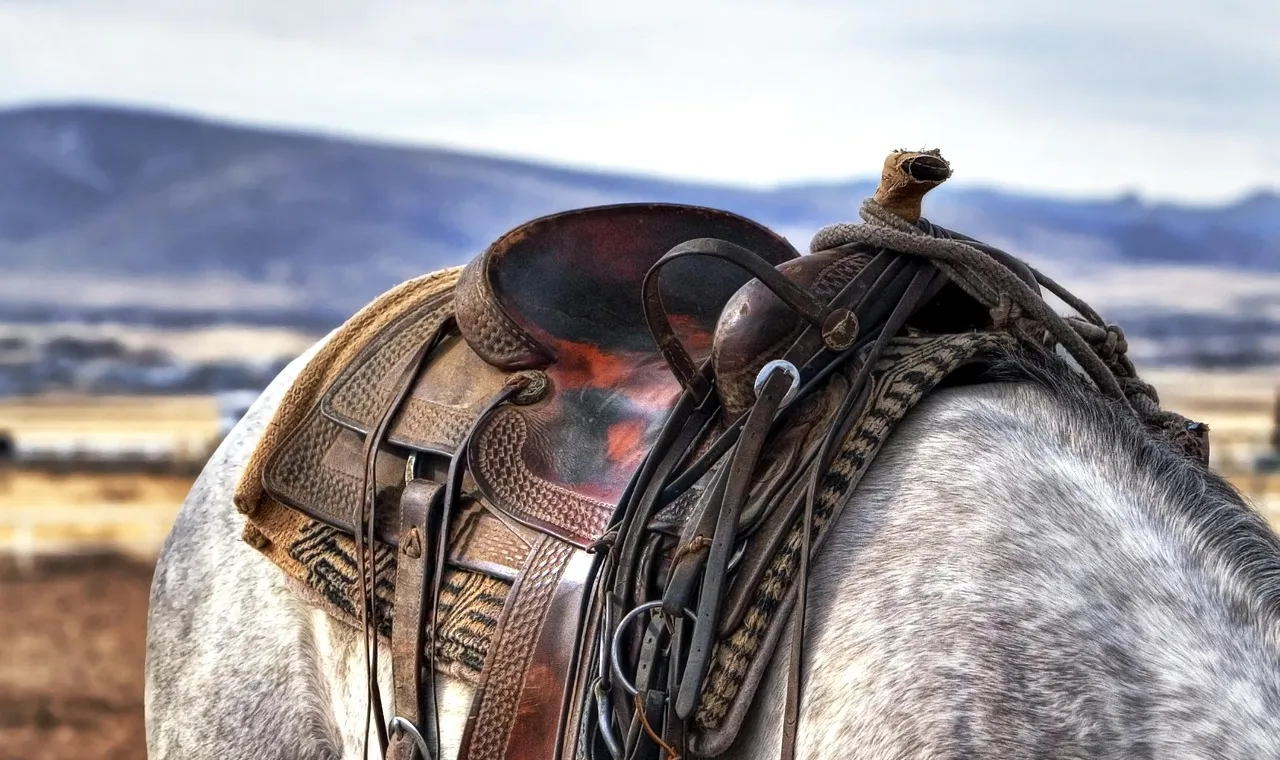
Most show classes reward a horse for looking its best. Ranch riding rewards a horse for looking like it has a job, and the rulebook says so in language plain enough to quote.
Rule SHW418.1: no hoof polish, or hoof black. SHW418.2: no braided or banded manes or tails, and no tail extensions. Equipment with silver, further down, should not count over a good working outfit.
The purpose, in the association’s own words
The 2026 AQHA handbook opens the class by saying what it is for, and the sentence is better than any summary of it. The purpose is to measure the ability of the horse to be a pleasure to ride while being used as a means of conveyance from performing one ranch task to another.
Conveyance between tasks. The horse is not the event. The horse is how you get to the event and still have something left when you arrive.
It goes on: the horse should reflect the versatility, attitude and movement of a working ranch horse riding outside the confines of an arena, and should be well trained, relaxed, quiet, soft and cadenced at all gaits. The gait definitions the class points to ask that movement simulate a horse needing to cover long distances, softly and quietly.
Appearance is a scored item, not a dress code
This is the part I had wrong before I read the handbook, and it is more interesting than the grooming ban.
A horse is scored out of 100, starting from 70, with each manoeuvre marked between +1½ and -1½. And then, separately: natural ranch horse appearance will also be evaluated, ranging from plus 1½ to minus 1½.
Looking like a working horse is worth up to a point and a half. It is not a rule you comply with and forget, it is a line on the scoresheet, marked the same way the lope is marked. The handbook asks for a natural ranch horse appearance from head to tail in each manoeuvre.
Too slow is a penalty
The penalty list is where a class shows what it is afraid of becoming.
One point, per gait, for being too slow. One point per manoeuvre for being over-bridled, and one for being out of frame. Three points for draped reins, which pairs with a line up in the class description: the horse may be ridden on light contact or a relatively loose rein without undue restraint, but not shown on a full drape.
So a horse can lose marks for being ridden too slowly, and lose more for being ridden on a rein with no contact at all. Both of those are corrections aimed at a specific drift, and if you have read anything about western pleasure in the last thirty years you know which one.
There is a rule that makes the point without needing me to. A horse may not cross-enter western pleasure and ranch riding at the same show, in any division. The association has decided these are different questions and you may not answer both on the same day with the same animal.
What the pattern is allowed to contain
One of fifteen approved patterns, and no time limit. Natural logs are required. Touching or holding the saddle horn is permitted, which quietly tells you the class expects a rider to be doing something other than posing.
Five points come off for blatant disobedience, which the handbook itemises as kicking, biting, bucking, rearing and striking, counted for each refusal. A run that skips a manoeuvre, adds one, or leaves one incomplete goes off-pattern and is placed below every horse that performed all of them.
The order it is judged in
Heather Young, an AQHA and APHA Professional Horseman and a carded judge, has set out the hierarchy she says judges are taught and use in every event: correctness first, then quality, then degree of difficulty. Her baseline for correct is a four-beat flat-footed walk and a two-beat trot without breaking gait, and her advice on speed is that it is the last thing to think about.
Read that next to the handbook’s gait definitions and it lines up exactly. A walk is a natural, flat-footed, four-beat gait. A trot is a natural two-beat gait with more forward motion than the western jog. An extended lope is not a run or a race.
Why I keep coming back to this one
I have watched ranch riding at the rail, and it is the class that best explains what I like about western riding generally. The question being asked is whether a horse can carry somebody through a day’s work and still be worth sitting on at the end of it.
The horse leaves the pen with its own mane, its own tail and unpainted feet, having been marked on whether it looked like it could do the job. A point and a half of the score says so explicitly.