What happens in a trail class
A judged course of gates, poles, bridges and a mailbox. The rulebook credits a horse for picking its own way through, and keeps the water hazard dry.
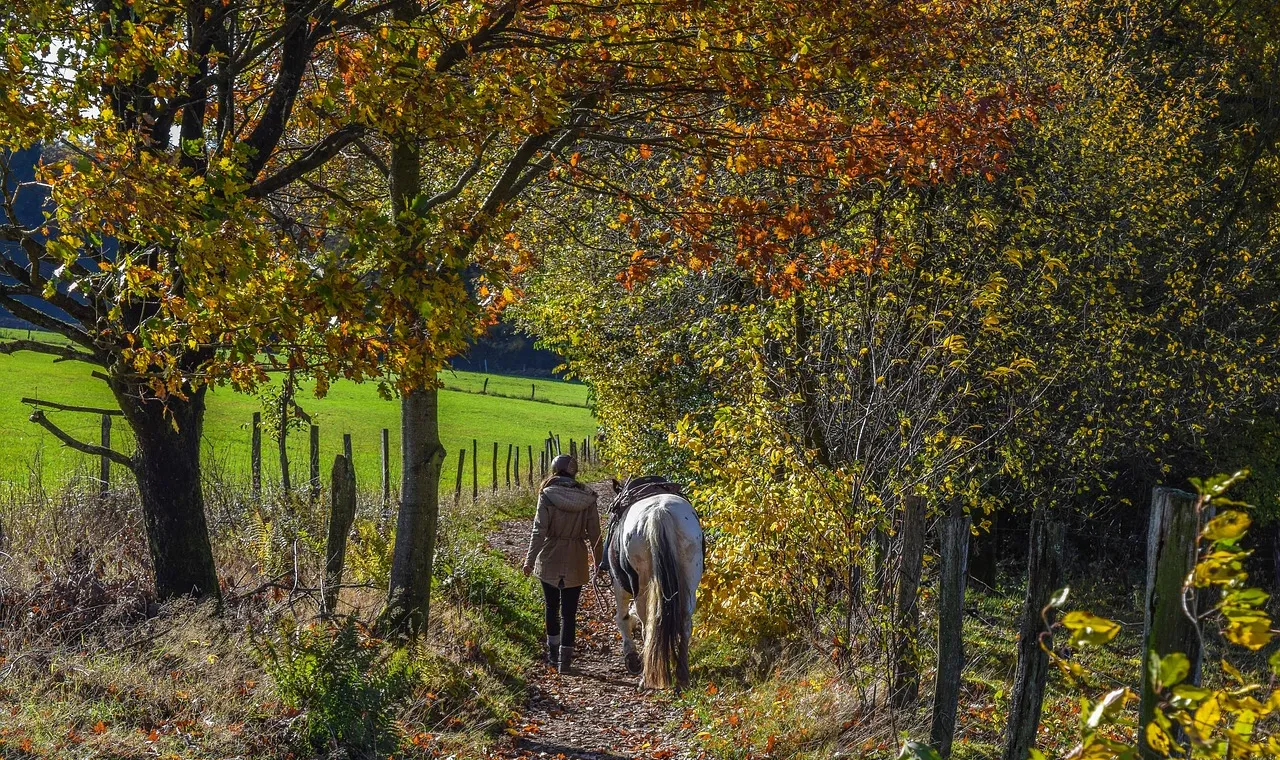
Trail is the one I have actually ridden, so this is the post where I know the least by proportion of what there is to know.
I rode it at beginner level, on the riding school’s horse rather than one of my own, and badly. What kept me at it is the thing the class is built on: you are not learning to perform, you are learning to ask a horse to do ordinary jobs and have it agree.
Three obstacles you cannot avoid
A course uses at least six obstacles. Three must come from the mandatory list, and at least three more from the optional one.
The mandatory three: open a gate, pass through it and close it. Ride over at least four logs or poles. Back the horse through something.
The gate is the whole class in one obstacle. You ride alongside, take hold, work the latch, walk the horse through while still holding on, turn, and close it. Losing control of the gate is penalised, and letting go of it costs five points. Failing to open and shut it at all is a disqualification.
If you have ever watched somebody do that badly, and I have been that somebody, you know how much is going on. The rider is doing three things with two hands. The horse is being asked to step in directions it cannot see the point of.
The optional list gives the game away
Water. Serpentines. A wooden bridge, negotiated at a walk only. Put on and remove a slicker. Remove and replace materials from a mailbox. A side pass. Four logs laid in a square.
Carrying an object gets its own qualifier, and it is the sentence that made me like this class: only objects which reasonably might be carried on a trail ride may be used.
The water hazard has a qualifier too. It shall remain dry at all times, in all divisions. A water obstacle that is never allowed to contain water is the kind of thing a rulebook arrives at after an incident, and I would like to know which one.
What is actually being marked
Scoring starts at 70 and each obstacle is marked from +1½ to -1½, independently of penalties.
Credit goes to a horse negotiating obstacles with style and some degree of speed, positive expression and minimal visible or audible cueing, provided correctness is not sacrificed. And then a line I did not expect: horses should receive credit for showing attentiveness to the obstacles and the capability of picking their own way through the course when the obstacles warrant it.
Picking their own way. The trail horse is credited for working something out, which puts this class on the same side of an argument as cutting and the opposite side from reining, where any movement a horse makes on its own counts as a lack of control. Three western classes, three different answers about how much a horse should think.
Horses with an artificial appearance over obstacles are to be penalised.
The penalty list is a list of temptations
Half a point for each tick of a log, pole, cone or plant. A point for hitting or stepping on one. Three points for knocking down an elevated pole, or for stepping outside the boundary of a back-through with one foot.
Five points for dropping the slicker or whatever else you were told to carry. Five for letting go of the gate. And five for the use of either hand to instil fear or praise, which means you are penalised for reaching down to reassure your horse mid-course.
The disqualifications are sharper still. Excessively or repeatedly touching the horse on the neck to lower its head ends the run. So does carrying the head too low, defined as the tip of the ear below the withers consistently, or flexing the neck so the nose stays behind the vertical. The handbook describes that last one as showing the appearance of intimidation.
The judge must walk the course and has both the right and the duty to alter it, removing anything unsafe or non-negotiable. Management is told the idea is not to trap a horse.
The reason I stayed with it
English riding, watched from outside, seems to me largely about positions and movements that exist inside a show. I say that as somebody who has never ridden it and is describing an impression rather than a verdict.
Trail is the opposite of that impression. Everything in the course is a thing you would genuinely need. Getting through a gate without getting off is useful on any ride, anywhere, forever. So is a horse that will back up when asked, cross a bridge, and stand still while something rustles.
My daughter competes in TREC, which is the same instinct arriving from a French direction and mostly outdoors, and watching her ride it is the most fun I have at any competition. Both sports ask a question with a right answer you could use on a Tuesday.
I was not good at trail. I would still rather practise it than almost anything else I have been put on a horse to do.