Why western pleasure is the one I like least
The class I like least, and the one whose own judging documents are most openly at war with what it drifted into. That combination is worth writing about.
Of the western classes I have stood and watched, this is the one I enjoy least. I want to say that plainly at the top, because the rest of this post is more sympathetic than that opening suggests and I would rather not pretend to a neutrality I do not have.
Western pleasure is a rail class. Horses go round together at walk, jog and lope in both directions, and a judge decides which one looks like the most pleasant ride. There are no obstacles, no cattle and no clock.
The class says so itself
The most interesting document I read while writing this is a plain class description from the University of Arkansas, and it opens by conceding the fight. A considerable amount of controversy over the criteria for judging the western pleasure class has occurred in recent years, it says, before it explains anything else.
Then it gives the judge a test question that I think is genuinely good: does the horse appear as though it is a pleasure to ride?
Ask that, the document argues, and the forward-moving, balanced, well-mannered horse rises to the top, because it is the one you would actually want to be sitting on. Correct head carriage is the poll level with the withers, the nose slightly in front of the vertical, on a reasonable loose rein with light contact.
That is a clear picture, and it is not the picture that made this class notorious.
The peanut rollers
Lindsay Grice’s account in Horse Journals puts the drift in the 1980s, when horses were shown with their heads below the level of their withers, on a draped rein, at an ambling pace. They were called peanut rollers. Christine Little, quoted there, describes horses going from natural movers to mechanical looking animals dragging their heads.
The gaits went with the head. A three-beat lope has a moment of suspension in it. What replaced it was a flat shuffle which, in Grice’s phrase, would have most horsemen calling the vet if they saw it out in a pasture.
That last line is the one that lands for me. The complaint was not that the horses looked unfashionable. It was that they looked unwell.
What was done about it
More than I expected, is the honest answer. AQHA penalised excessively slow gaits from 1991, and later rules asked for forward motion and prompt transitions. The Arkansas description carries the current standard: the lope is asked for as a lope with a slight increase in forward motion, and an excessively slow, unbalanced stride should be penalised. A horse travelling with the tips of its ears below the point of its withers for several strides is recorded as not functionally correct.
There is a sentence in there about why the slowness broke the movement, and it explains the whole thing better than any critic has. Horses forced to shorten their stride to move slower begin to move unbalanced, and can end up looking lame to a degree that has nothing to do with being lame.
The same document is careful in the other direction too. Just because a horse is going faster, it says, does not mean the horse is moving more correctly. Nobody is asking for a race.
Why I still do not enjoy it
None of the above is a defence I can argue with, and the class has clearly spent thirty years arguing with its own worst version. My problem is more basic than the controversy and I cannot source my way out of it.
Every other western class I have watched asks a question with an answer outside the arena. Can this horse hold a cow. Can it get through a gate. Can it back out of a tight space. Western pleasure asks whether a horse looks like a pleasure to ride, judged by somebody who is not riding it, which is a question about appearance in a sport I like precisely because it is usually about function.
I am aware that this is close to being unfair. A horse that is genuinely soft, balanced and forward is a better horse for anything, and the class is trying to reward exactly that. The four criteria it uses are broke and quiet, soft and smooth, functionally correct, and consistency and quality, and I would want all four in any horse I ever sat on.
So the class is not wrong about what it wants. I just find watching it the least interesting way of finding out, and the discipline has enough honest critics inside it that one more outside opinion changes nothing.
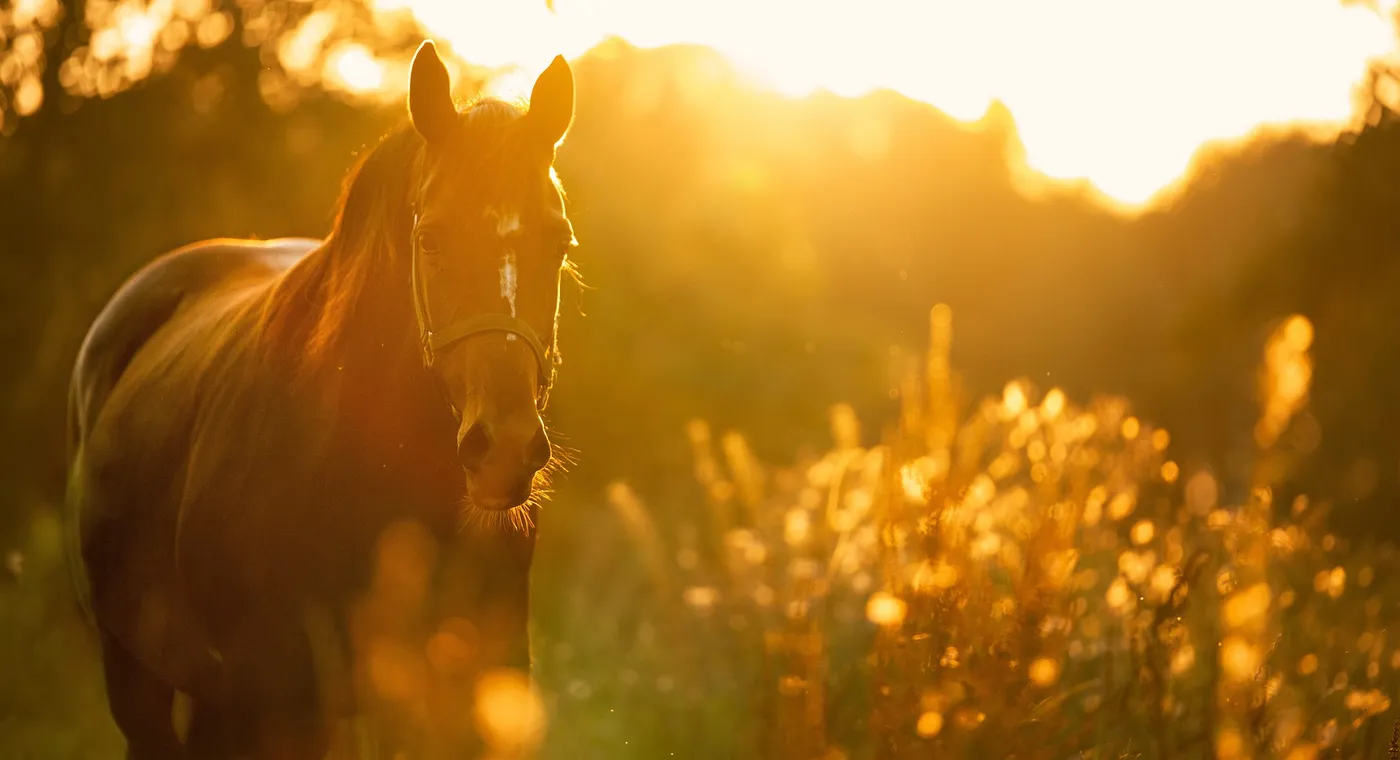
The horse in the photograph at the top of this post is standing in a field with its head where it wants it. Thirty years of rulemaking went into getting the show ring back to roughly that.