Why a barrel saddle is its own object
Deeper seat, higher cantle, thinner horn, and as light as the tree allows. Every difference from a roping saddle is a consequence of what the rider has to survive.
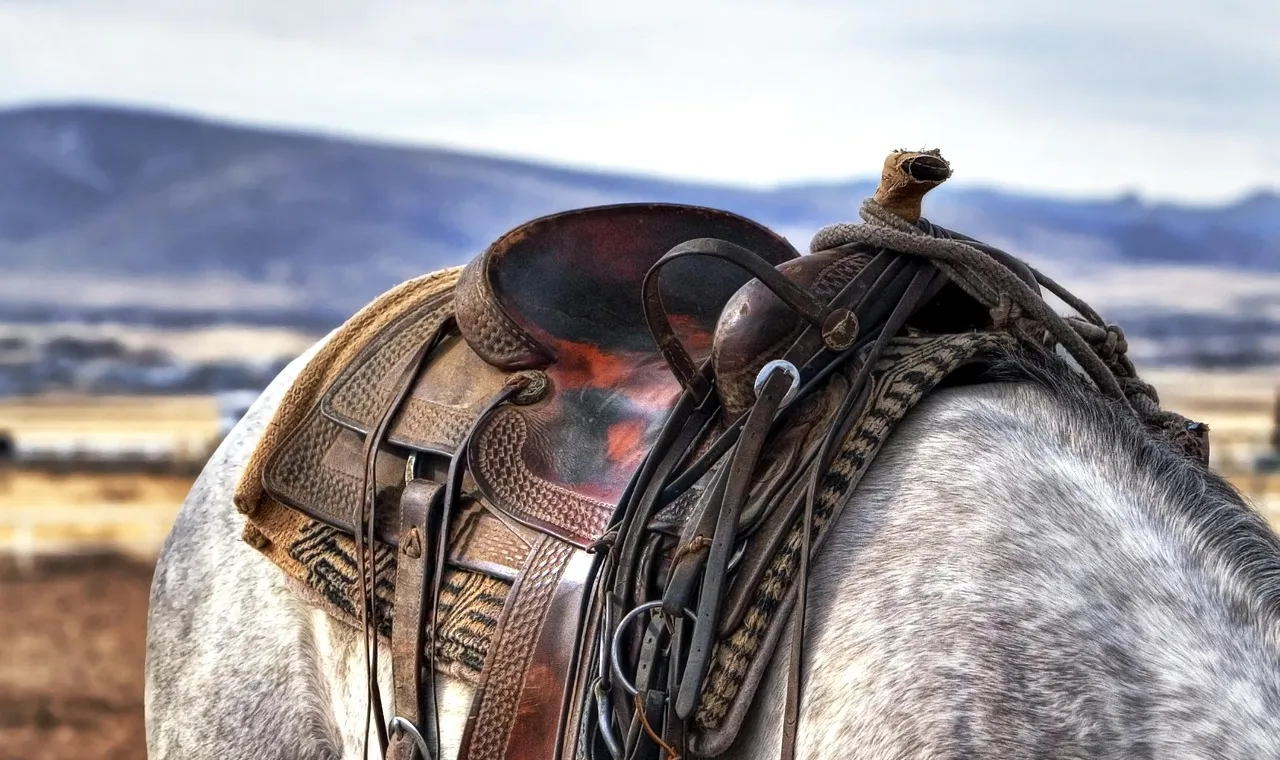
A western saddle looks like one object to anybody arriving from outside. It is not. A roping saddle and a barrel saddle are built to survive completely different afternoons, and every difference between them follows from that.
The roping saddle is built for one moment
A roper throws a loop over a running steer and then the rope comes tight against the saddle horn with the steer’s whole weight and momentum behind it.
So the roping saddle is built around that. A stronger tree and horn, because the horn is a structural anchor rather than a handhold. Roughout or suede seats, for grip. A low cantle and a slick pommel, so the rider can get out of it in a hurry. Stirrups hung further forward. And weight: much heavier than a barrel or cutting saddle, because you cannot make something light and also make it survive a rope coming tight.
The barrel saddle is built for fourteen seconds
The barrel racer has no rope and no steer. She has three hard turns at speed and a horse that changes direction underneath her, and her problem is staying in the middle of it.
Everything inverts. Lighter, because there is nothing to anchor and the horse is being asked for speed. A deeper seat and a higher cantle, which hold the rider in place through a turn rather than letting her out of it. A thinner horn, because it is something to hold rather than something to dally against. Free-swinging fenders.
Put the two side by side and the horn tells you most of it. On one saddle it is a bollard. On the other it is a handle.
Made to order, and made in Brazil
Barrel saddles are one of the corners of this sport where custom building is normal rather than exotic, and Brazil has become one of the places it happens.
Marcio Martins Cardoso de Lima, who works under the name Master, has been building saddles since 1989. His shop makes to order, describes working one to one with the rider on the design, and runs a lightweight line aimed at barrel racers specifically. Every saddle is handcrafted by artisans under his supervision.
That is the shop’s own description of itself and I am citing it as exactly that. I have never sat in one, I have no basis for comparing it to anybody else’s work, and a maker’s website is evidence of what a business says rather than of how the saddles ride.
What is worth noticing is the shape of the trade. A saddle is fitted to a horse and a rider, built by hand over weeks, and ordered from another continent. There is a version of the western world that is entirely mass-produced, and this is not it.
Why this is the tack post I found most interesting
The bits and the hackamores in this sport are governed by rulebooks measured to the sixteenth of an inch. The saddles are not. There is no rule that a barrel saddle must have a higher cantle.
It has one because riders kept falling off the other kind, and a maker somewhere fixed it, and the fix stayed. The object was designed by the sport rather than by a committee, and you can read the sport off the object.