Mare, gelding, filly, colt
The words for a horse by age and sex, why every registered horse has a birthday of 1 January, and how tall a hand is.
If you arrive at this subject as an adult, the vocabulary is the first wall. People use six words where you expected one, and nobody stops to explain because to them it is like being asked what “brother” means.
Here is the set, plainly.
By sex
A mare is an adult female. A stallion is an adult male that has not been castrated. A gelding is a male that has been.
Most male horses being ridden are geldings. The reason is temperament and practicality rather than anything exotic: an uncastrated adult male is a serious animal to keep around other horses, and most people who ride do not intend to breed.
By age
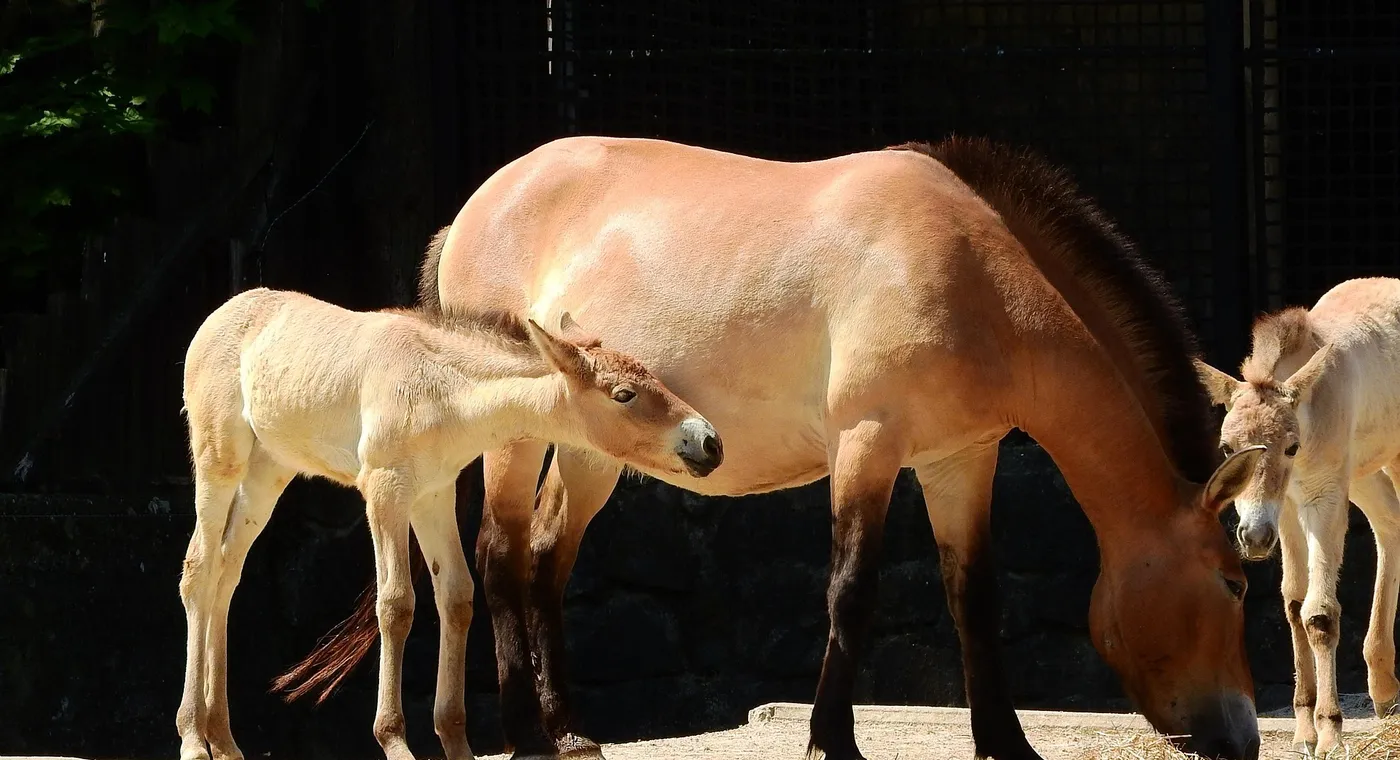
A foal is a horse of either sex in its first year. A weanling is one that has been weaned off its mother. A yearling is one year old.
Then it splits by sex again. A filly is a young female, a colt a young male, both usually until about four.
Colt is the one outsiders get wrong most often, because it gets used casually to mean any young horse. It means a young male. A young female is never a colt.
The birthday everybody shares
Here is the piece that surprised me, and it explains a lot of otherwise baffling class names.
AQHA computes a horse’s age from a calendar year starting on 1 January of the year it was foaled. It is a weanling during the calendar year in which it was born, and a yearling during the first calendar year following, regardless of the time of year it was actually born.
The rulebook gives its own example: a horse foaled at any point in 2011 was one year old on 1 January 2012, and two years old on 1 January 2013.
So a foal born in December turns one a few weeks later. Every registered horse shares a birthday, and a horse’s official age can be almost a year off its real one.
This is not an oddity for its own sake. It is what makes age-restricted classes possible at all: the cutting Futurity is for three-year-olds, and without a shared birthday “three-year-old” would mean a range of animals nearly a year apart in development competing on different terms.
There is a check on it, too. A horse cannot compete at an AQHA event if its age as determined by examining its teeth does not match the age on its registration certificate.
How tall
Horses are measured in hands, and a hand is four inches. The measurement is taken at the withers, the ridge at the base of the neck, because that is a fixed point on the skeleton and the head moves.
A height like 15.2 hands is not decimal. It means fifteen hands and two inches, so the numbers after the point only run from 0 to 3.
An Icelandic horse averaging 13 to 14 hands is therefore about 132 to 142 centimetres at the withers.
Why this post exists
The house rule on this blog is that a word gets explained in the sentence where it first appears, in half a clause, rather than being left for a reader to look up.
This post is for the other case: when you have heard four of these words in one sentence at a rail and would like them all laid out somewhere quiet.