Watching my daughter ride TREC
A French sport that scores how slowly a horse can canter and how fast it can walk, over a course of things you actually meet out hacking.
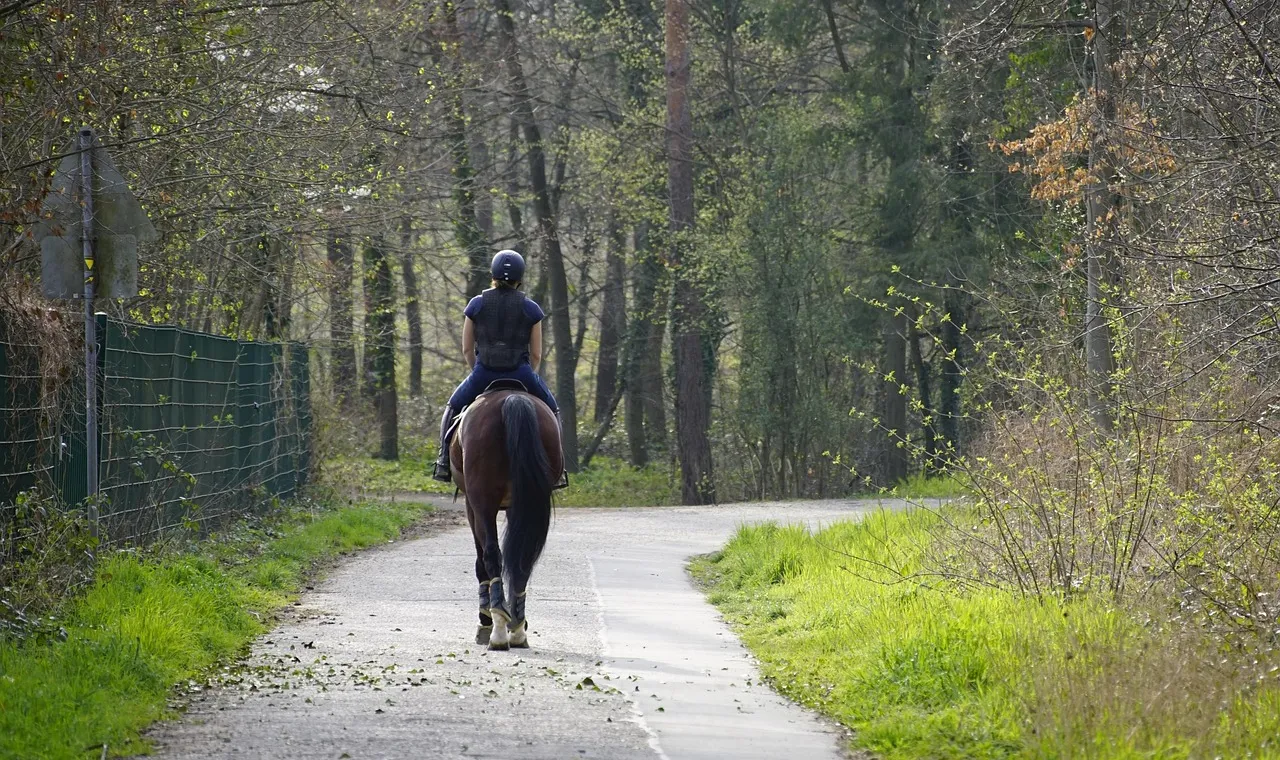
My daughter has tried a few TREC competitions and it is still my all-time favourite thing to watch when it comes to English riding styles. I think it is because it reminds me of the Western Trail I used to ride. I like that there is a relationship between the horse and the equestrian.
I am not saying dressage or show jumping doesn’t require skill, because it does! But, and this is entirely my own opinion, I often think it is more done for the rider than for the horse.
Three phases
TREC comes from France, where it was training for hiking in the mountains with horses. The sport comes in three phases scored together.
POR is mounted orienteering. A route with control points, ridden to a map, at a set speed. Up to 15 kilometres at level one, and up to 40 at level four.
MA is control of paces, down a corridor up to 150 metres long. It tests how slowly the horse can canter and how quickly it can walk.
PTV is a course of up to sixteen obstacles, each worth up to ten points, designed to simulate the things a rider meets out hacking: map reading, mounting and dismounting, water, low branches, gates, bridges, varied ground.
The winner is whoever has the most points across all three.
The history behind TREC
TREC stands for Techniques de Randonnée Équestre de Compétition, and the international side of it is run by the Fédération Internationale de Tourisme Équestre. FITE was born on 13 May 1975 in Dublin. International championships have been organised under it since 1989, and the first world championship was held at Saint-Pierre d’Albigny in Savoie in 1997. A memorandum of understanding signed in 2017 means the FEI now exclusively recognises FITE for promoting, regulating and organising international equestrian tourism.
Part of the appeal is that the sport stayed open. Where other disciplines restrict entry to particular breeds or types, TREC GB’s rulebook says the competition is open to any horse, pony or other equine. Horses must be four years old to compete at Levels 1 and 2, and five at Levels 3 and 4. Mares more than four months pregnant may not compete.
The rider ages are worth knowing if you have a child in this. You must be five years or older to ride in a TREC GB competition at all, and 14 or older to ride a POR as an individual. Younger than that, you ride the POR as a pair with a partner of 18 or over. So a nine-year-old navigating open country is doing it alongside an adult, by rule.
The pace phase is interesting
Read that MA description again, because it inverts every instinct about what a horse competition measures.
How slowly can it canter. How quickly can it walk.
Both are hard, and both are hard in a way that is the opposite of impressive. A slow canter requires a horse to keep a three-beat gait going while barely moving forward, which takes balance rather than power. A fast walk requires it to lengthen without breaking into a trot, which takes discipline rather than speed.
Nobody wins by going fast. That is a competition designed by people who ride out and have thought carefully about what actually matters on a long day.
The same goes for the POR. You don’t win by riding fastest, you win if you can navigate and keep a specific pace. Riding too slow loses points, but riding too fast loses points as well.
PTV obstacles are similar to Western Trail riding
Gates. Water. Low branches. Mounting and dismounting. Bridges.
If you have read the trail class post on this blog, that list will look extremely familiar, because the American western trail class is built from almost exactly the same inventory. A gate you must open, pass through and close. A bridge. Water. An object to carry.
Two sports, one French and one American, that have never had much to do with each other, have independently arrived at the same conclusion about what is worth testing. Both looked at everything a horse and rider do, and both decided the answer was creating obstacles that resemble real life scenarios if it wasn’t just a sport.
What it is like to watch as a parent
Mostly you cannot, and yet you still can.
The orienteering phase happens out in the country, out of sight, for two hours. You stand about. You talk to other parents. Somebody’s horse comes back muddier than it left.
At world championships and bigger events you can follow riders by GPS tracking, and instead of one or two hours of orienteering it is a full day. Imagine riding a full day of orienteering and watching your pace the whole time. It is incredible what those top riders can do.
Then the obstacle course arrives and you get twenty minutes of watching a child work out a problem on an animal much larger than her, in public, with a scorer standing there. The labyrinth is the one I hold my breath for. Just a small misstep and it all falls down and you score zero points on that one.
The rulebook calls it the S bend, and it can be ridden or led. It is a series of poles on the ground in an S or Z shape, and the horse goes between them without touching them. It has to be done at a walk, and any uncorrected change of gait counts as dangerous. Knocking a raised pole, touching an unraised one, or stepping over the centre poles all cost you. Complete less than half of it in walk and the score for that obstacle is zero.
Strangely enough, one of the best days I have had at any competition is a wet one, in a field, waiting for somebody to come back off the POR.