Eight western disciplines, and what they disagree about
A guide to the western classes on this blog. They share a breed and a tradition, and they cannot agree on how much a horse should think for itself.
I have spent a while now reading rulebooks and standing at rails, and this is the map I wish somebody had handed me at the start.
Eight western disciplines, what each one actually asks, and where to find the longer version.
The cow ones
Cutting — separate one cow from a herd and hold it away for two and a half minutes. The rider drops the rein hand and stops steering, which is not the same as stopping work.
Working cow horse — a reined pattern and a cow held down a fence, scored on control without excessive reining or spurring. Its rulebook describes the training progression rather than the class: snaffle, hackamore, two-rein, bridle, over years.
Team roping — two riders, one steer, one time. A legal half-head catch requires one of the steer’s eyes to look through the loop.
The pattern ones
Reining — circles, spins, rollbacks and sliding stops, ridden alone to a fixed pattern.
Ranch riding — a pattern ridden as a working horse would, with hoof polish and tail extensions banned and natural appearance scored in its own right.
Trail — a course of obstacles you would genuinely meet: a gate, poles, a bridge, a mailbox, a slicker.
The rail one and the fast one
Western pleasure — horses judged together on the rail on whether they look like a pleasure to ride. The class I like least, and the one most openly at war with its own history.
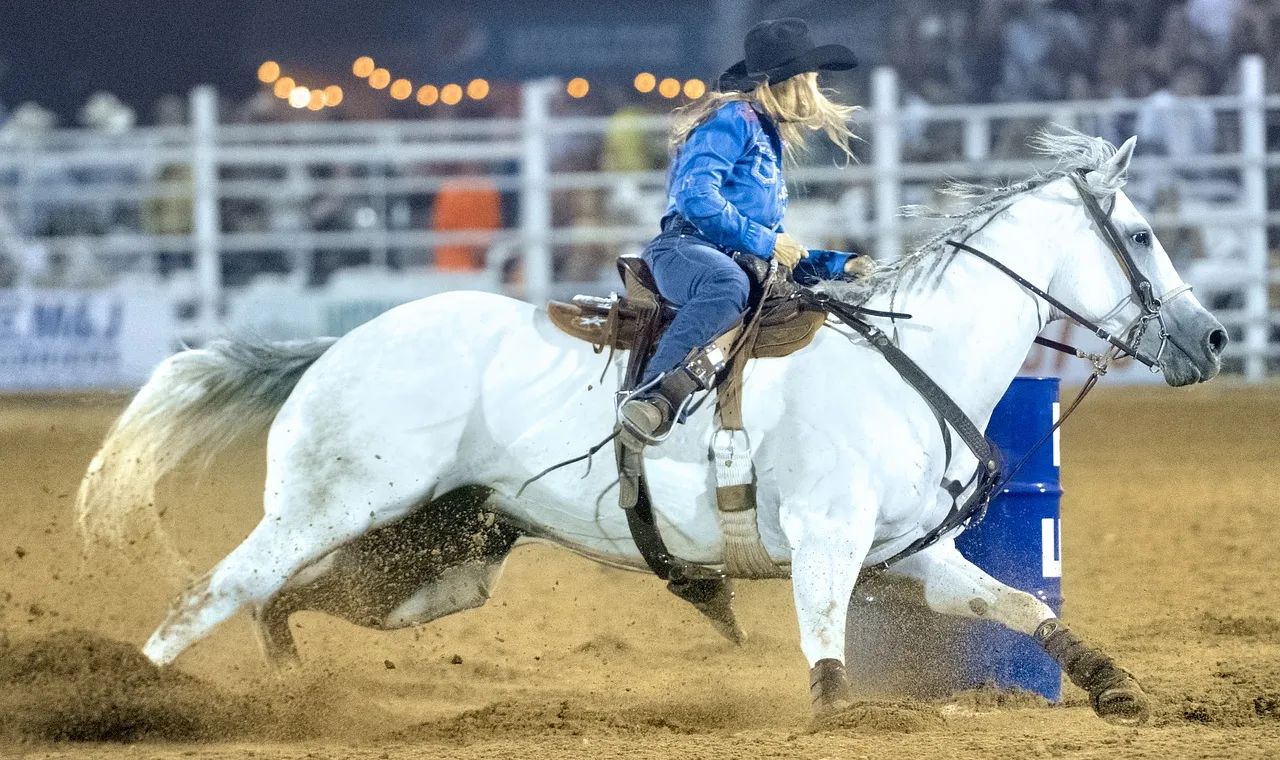
Barrel racing — three barrels, a clover-leaf, a clock, no judge at all.
What they disagree about
Here is the thing I did not expect to find, and it is the reason this post exists rather than being a list.
These sports share a breed, a tradition and mostly a country. They do not agree on how much a horse should think for itself.
Cutting is built on the horse working the cow after the rider has stopped steering. The whole product is a horse with its own read on the animal in front of it.
Trail gives explicit credit for a horse showing attentiveness to the obstacles and the capability of picking its own way through the course.
Reining says the opposite, in as many words: the horse should be dictated to completely, and any movement on his own must be considered a lack of control.
One tradition, three answers. I find that more interesting than any individual class.
And the thing I got wrong
I started this series believing I preferred western riding because it is about tasks a horse and rider would genuinely do. Gates get opened. Cattle get held.
Reining’s rulebook took that apart. It says plainly that a horse’s controlled speed raises the difficulty and makes him more exciting and pleasing to watch to an audience. The sport is not pretending the sliding stop is for the cattle’s benefit.
So my preference is narrower than I had been stating it. What I actually like are the classes whose question has an answer outside the arena. That is most of them, and it is not all of them, and the ones it excludes are honest about being exhibitions.
Two are still missing from this blog: reined cow horse in its own right, and a proper look at the ranch classes beyond ranch riding. They will turn up.